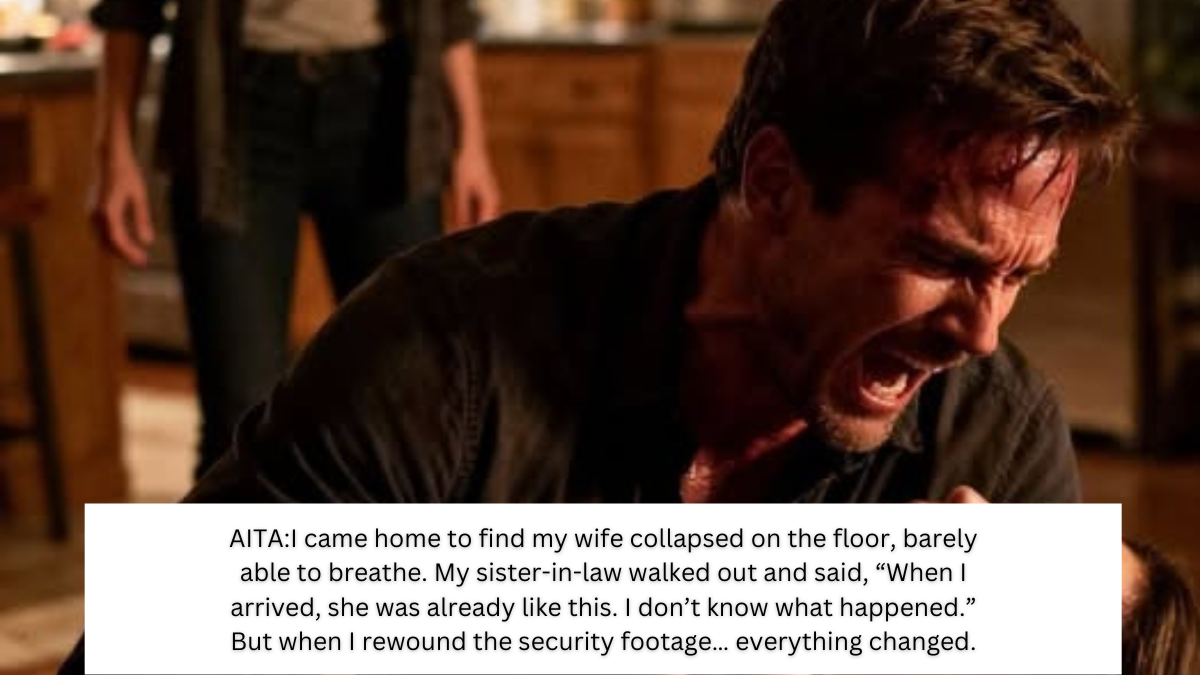

I came home to find my wife collapsed on the floor, barely able to breathe. My sister-in-law walked out and said, “When I arrived, she was already like this. I don’t know what happened.” But when I rewound the security footage… everything changed.
The Missing Thirty-Eight Minutes: How a Hidden Camera Saved My Wife
I came home to find my wife, Emily, collapsed on the living room floor, her body twisted like a discarded marionette. Tuesday, November 14th, 2023. The time was exactly 5:47 PM.
I remember the time because, as a software engineer at Microsoft, my life is governed by timestamps, logs, and precise data. I had left the Redmond campus at 5:15 PM, driving through the relentless Seattle drizzle, expecting the comforting sensory routine of home: the smell of rosemary chicken, the hum of the heater, and Emily asking about the new code deployment.
Instead, I walked into a silence so heavy it felt like a physical weight pressing against my eardrums.
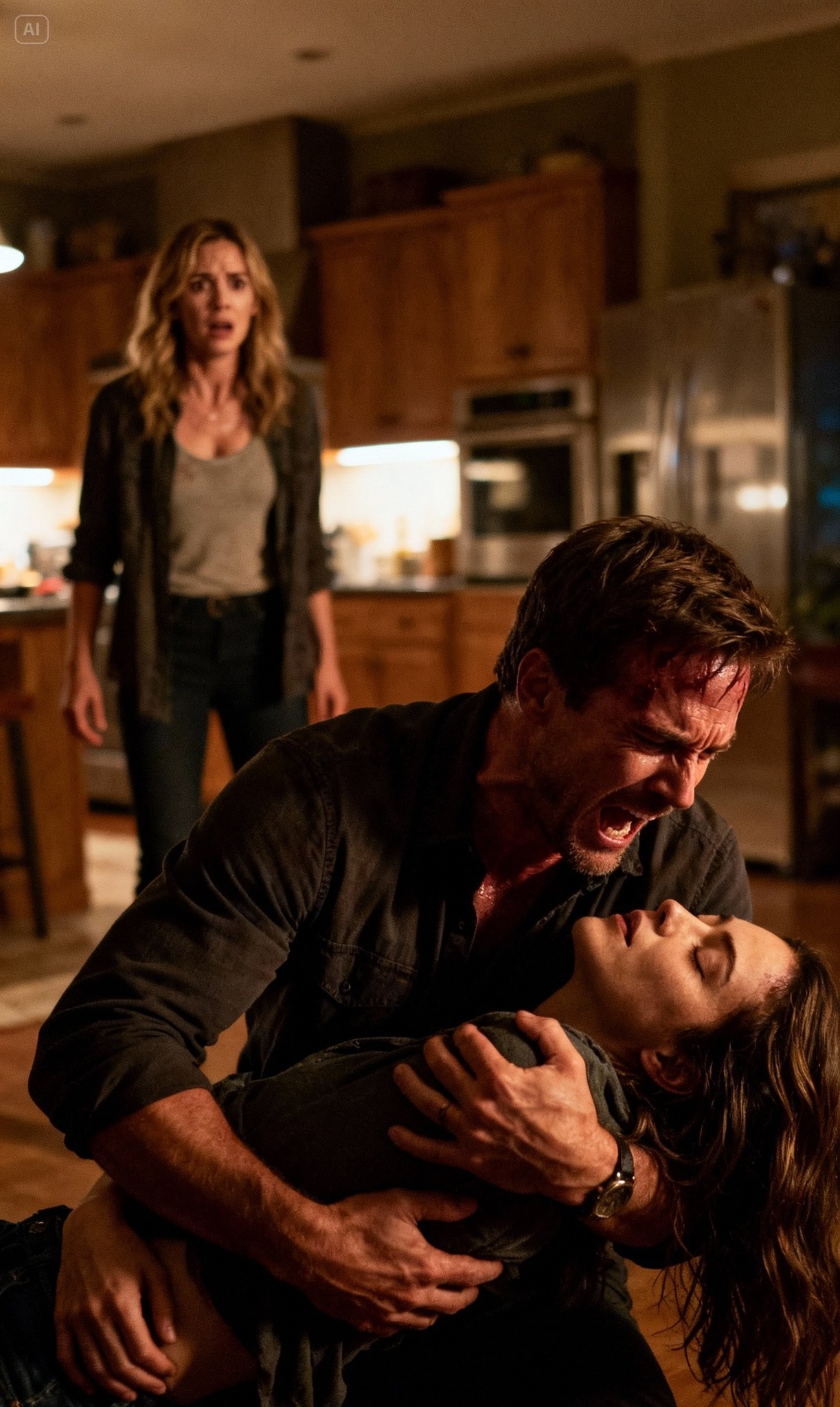
Then I saw her. Face down on the hardwood. Her skin was the color of old parchment, pale and translucent. Her breathing was a wet, ragged sound, shallow and weak, like someone drowning in the open air.
“Emily!”
I dropped my laptop bag—the thud echoing too loudly—and slid to my knees beside her. She tried to speak, her mouth opening and closing, but only broken, choking sounds escaped. Her eyes were open but unmoored, the pupils dilated to black saucers. Her lips were cracked and dry. Her hands, usually so steady, were trembling with a violent, rhythmic palsy.
My sister-in-law, Karen, was standing by the kitchen door. She held her phone in a white-knuckled grip, staring at me.
“When I got here, she was already like this,” Karen said. The words came out too fast, too polished. A stream of data without the necessary latency of shock. “I don’t know what happened. I just arrived maybe five minutes ago and found her on the floor. I was about to call 911.”
Something in her voice scraped against my nerves. It sounded rehearsed. Mechanical.
“What do you mean you just got here?” My hands shook as I pressed two fingers to Emily’s neck. Her pulse was a terrifying, thready flutter. “I thought you came by for lunch like we planned.”
“But when I walked in, she was like this,” Karen repeated, dodging the question.
“Lunch was six hours ago, Karen!” I snapped, the panic rising in my throat like bile.
She blinked, a momentary glitch in her composure. “I meant… I came by after lunch. Around five. To check on her.”
I cradled Emily’s head. “Honey, look at me. What happened?”
She tried to focus. Her eyes locked onto mine, and in them, I saw a raw, primal terror that I had never seen in six years of marriage. It wasn’t confusion. It was fear. She darted a glance at Karen, then back to me, her chest heaving.
I grabbed my phone and dialed 911. Behind me, Karen began to pace. She started talking—a nervous, incessant drone about the traffic on I-5, the rain, a sale at Nordstrom. She was filling the air with static, anything to drown out the reality of her sister dying on the floor.
“Sir, what is your emergency?”
“My wife. She’s collapsed. Can’t speak. Signs of shock.”
As I gave the dispatcher the details, I watched Karen. She wasn’t looking at Emily. She was looking at the hallway, at the kitchen counter, everywhere but at the person she claimed to love. And for the first time, a cold, dark algorithm of suspicion began to run in the back of my mind.
Chapter 2: The Vacuum of Truth
The paramedics, Martinez and Chen, arrived at 6:03 PM. They were a blur of efficient motion, checking vitals, starting an IV.
“When did you last see your wife?” Martinez asked, his voice calm but urgent.
“This morning. 8:00 AM. She was recovering from gallbladder surgery last week, but she was fine. Mobile, eating, resting.”
“Who has been with her today?”
I looked at Karen. She stepped forward, placing a hand theatrically over her heart. “I stopped by around lunchtime to check on her. She seemed okay then. I left around one. When I came back at five, I found her… found her like this.”
Martinez glanced at Karen, then at the trembling woman on the stretcher. A dark, knowing look passed between him and his partner.
“We’re taking her to Overlake Medical Center,” Martinez said. “Severe dehydration, hypotension, signs of extreme physiological stress. Possible shock.”
“I’m following you,” I said, grabbing my keys.
Karen touched my arm. Her fingers felt cold. “I’ll come with you, Mark.”
“No.” The word fired out of me harder than I intended. I pulled my arm away. “I’ll meet you there.”
Let me tell you about Karen. She is Emily’s older sister by three years. At forty-two, she was a walking storm of chaos—divorced twice, perpetually “between opportunities,” and always the victim of circumstances she created. Emily and I had carried her for years. We housed her for months after her second divorce. We lent her eight thousand dollars to “get back on her feet”—money that vanished into designer clothes and trips to Vegas.
“She’s my sister,” Emily would always say, her soft heart overriding her logic. “Family helps family.”
I had tolerated the boundary violations because I loved Emily. But two weeks ago, when Emily had her laparoscopic cholecystectomy, Karen had volunteered to “watch her” during the day. I was wary, but I couldn’t take two weeks off work.
Now, Emily was in an ambulance, and Karen’s timeline was full of holes.
At Overlake, Dr. Patricia Wong, an ER physician with eyes that had seen everything, pulled me aside.
“Mr. Mitchell, your wife is stable, but her condition is perplexing. She is severely dehydrated, yes. But the primary concern is her psychological presentation.”
“What do you mean?”
“She is in a state of acute psychogenic shock,” Dr. Wong said. “Her cortisol levels are through the roof. When we mentioned calling family members, her blood pressure spiked to dangerous levels. This isn’t just physical recovery gone wrong. Has something happened at home? A domestic incident?”
I thought of Karen’s pacing. Her shifting eyes. The way Emily had looked at her sister with pure, unadulterated horror.
“I don’t know,” I said, a cold dread coiling in my gut. “But I’m going to find out.”
“Is she safe at home?” Dr. Wong asked, the standard question heavy with implication.
“She is with me,” I said. “But I need to know who else was there.”
I left the hospital at 8:30 PM. I needed answers, and I knew exactly where to find them.
When I pulled into my driveway, Karen’s white Honda Accord was still there. She met me at the door, holding a dishrag.
“She was inside cleaning up,” she said, flashing a tight, brave smile. “I just wanted to make sure the house was nice for when she comes home.”
I watched her move through my kitchen. She wasn’t cleaning. She was surveying. Opening drawers, checking stacks of mail, running her hand along the mantlepiece like she was appraising an acquisition.
“You can go home now, Karen,” I said, my voice flat.
“I’d rather stay until we know—”
“She’s stable. You can go.”
“Are you sure? I could stay the night. Help you out.”
Her insistence made my skin crawl. “No. Thank you. Leave.”
She left at 8:52 PM. I watched from the window until her taillights disappeared. Then, I locked the deadbolt and went straight to my home office.
Chapter 3: The Ghost in the Machine
We had installed a robust Ring security system two years ago. Four cameras: Kitchen, Living Room, Front Door, Garage. Cloud storage. Motion-activated.
I pulled up the app on my desktop monitor, my fingers flying across the keyboard. I navigated to Tuesday, November 14th.
The timeline populated.
- 08:00 AM: I leave for work.
- 12:04 PM: Karen arrives.
I clicked play. Karen entered the kitchen. Emily, looking tired but smiling, stood up to hug her. They talked. It looked normal.
Then, I scrolled forward.
- 12:47 PM: Emily and Karen are at the kitchen table. Papers are spread out between them. Emily is shaking her head, looking distressed.
I went to click the next motion event.
- 02:01 PM.
I blinked. I checked the timestamps again.
12:47 PM to 02:01 PM.
There was a gap. Thirty-eight minutes of missing footage.
My blood ran cold. The system doesn’t just “skip.” It records on motion. And they were sitting at the table. I checked the logs. “Footage Deleted via App – User: Admin.”
Someone had manually deleted the footage. And since Emily was the victim and I was at work, that left one person.
I fast-forwarded to the afternoon.
- 04:47 PM: Emily appears on the living room camera. She is crawling. Literally crawling across the rug, clutching her arm, moving with the sluggish agony of someone drugged or beaten.
- 04:53 PM: Karen walks into the frame. She doesn’t rush to help. She stands over Emily. She checks her watch. Then, she walks to the mirror and fixes her hair. She breathes heavily, looking at the camera with an expression I will never forget: Calculation.
She wasn’t panicked. She was waiting. Waiting for the clock to run down. Waiting for me.
My hands shook so badly I almost knocked my coffee mug over. I checked the other cameras. Same gap. The footage from 12:47 to 2:01 was scorched earth.
But Karen—arrogant, tech-illiterate Karen—had made a fatal error. She didn’t know about the redundancy.
Three years ago, before the sleek Ring system, I had set up an old Google Nest camera on a bookshelf in the hallway. It was hidden behind a sprawling pothos plant. I had forgotten to take it down. Emily had forgotten it existed.
But it was still plugged in. It was still connected to the Wi-Fi. And it was still uploading to a forgotten Google account.
I logged in, my heart hammering against my ribs like a trapped bird. The interface loaded. The little green light on the screen indicated “History Available.”
I clicked on 12:47 PM.
The angle was obscured by leaves, but the audio was crystal clear, and the view into the kitchen was visible through the foliage.
I watched Karen pull a stack of documents from her bag. She slammed them onto the table.
“Sign them, Em. Just sign them.”
“No, Karen. I can’t. Mark and I need to discuss this.”
“Mark doesn’t get a say! You owe me this!”
Then, the violence happened. Fast and brutal.
Karen stood up. She grabbed Emily’s arm—the one with the IV bruising from surgery—and twisted it. Emily screamed, a sharp, jagged sound. Karen shoved her. Emily, weak from recovery, stumbled and fell hard against the granite countertop, hitting her head.
She slumped to the floor.
Karen didn’t help her up. She leaned down, her face twisted into a mask of rage. “You’ve had everything handed to you your whole life. The pretty husband. The house. The money. It’s my turn.”
She hauled Emily up by her hair. She forced Emily into the chair. She shoved a pen into her hand and physically clamped her own hand over Emily’s, forcing the movement.
“Sign. Or I swear to God, I will make sure you never recover.”
Emily was sobbing, shaking her head, terrified. But she signed. Page after page.
When it was done, Karen released her. Emily slumped forward, clutching her stomach.
Then came the part that made me wretch.
Karen gathered the papers. She smoothed her blouse. She took out her phone. She looked directly at the Ring camera mounted in the corner of the kitchen. She tapped her screen. The blue light on the Ring camera extinguished.
She had deleted the evidence.
Then, for three hours… she sat. She sat on my couch, watching TV, while her sister lay moaning on the floor a few feet away. At one point, she practiced crying. I watched her scrunch up her face, force out a sob, and then check her reflection in her phone to see if it looked convincing.
She was waiting for 5:45 PM. She was timing my commute.
Chapter 4: The Hunt
I didn’t sleep. I sat in the dark, the glow of the monitor illuminating the rage that had calcified in my chest.
At 9:47 PM, I called Marcus Reeves, our estate lawyer.
“Marcus, I apologize for the hour. I need you tomorrow morning at 8:00 AM. And I need you to bring a contact from the Seattle PD. Domestic violence unit. Aggravated assault.”
“Mark? What happened?”
“Emily was assaulted. By her sister. I have video evidence. And Marcus… I think she stole everything.”
The next morning, Wednesday, November 15th, Marcus met me at the hospital with Detective Lisa Warren. Warren was a veteran—gray hair, sharp eyes, a demeanor that suggested she had lost her faith in humanity decades ago.
“Walk me through it,” Warren said.
I handed her a USB drive. “Three hours of continuous recording. It shows the assault. It shows the coercion. It shows her deleting the primary security footage. It shows her waiting for my wife to potentially die.”
Warren plugged the drive into her laptop. She watched in silence. Her jaw tightened as she watched Karen twist Emily’s arm.
“This is felony assault,” Warren murmured. “Unlawful imprisonment. Coercion. Given your wife’s post-surgical state, we can add abuse of a vulnerable adult.”
“There’s more,” I said. “Check the finances.”
I logged into our bank app on my phone.
Our joint savings account, which held
47,300∗∗asofMonday,nowshowedabalanceof∗∗47,300** as of Monday, now showed a balance of **47,300∗∗asofMonday,nowshowedabalanceof∗∗
3,200.
A transfer of $44,100 had been initiated yesterday at 1:47 PM. Destination: Karen Diane Mitchell.
“She drained us,” I whispered.
Marcus was on his tablet, checking King County property records. He looked up, his face pale.
“Mark… the house.”
“What?”
“There’s a new filing. A Quitclaim Deed recorded electronically yesterday afternoon. A transfer of 25% ownership interest to Karen Mitchell.”
She hadn’t just stolen our cash. She had forced Emily to sign over a quarter of our home.
“I need to speak to your wife,” Detective Warren said, standing up.
We went into Emily’s room. She was awake, groggy but alert. When she saw the badge, she began to cry—silent, shaking sobs.
“Mrs. Mitchell,” Warren said gently. “I know you can’t speak well right now. But I need you to confirm something. Did your sister force you to sign documents yesterday?”
Emily nodded frantically.
“Did she threaten you?”
Nod.
“Can you write down what she said?”
I handed Emily a notepad. Her hand shook, but she wrote:
She said if I told anyone, she’d tell everyone I was crazy from the meds. That nobody would believe me. That I owed her. She hurt me.
“That’s enough,” Warren said, snapping a photo of the note. “We have probable cause. We have evidence. Where is she?”
I checked the ‘Find My Friends’ app. Emily and Karen shared locations for safety—a cruel irony.
The blue dot pulsed at Emerald Downs, the horse racing track in Auburn.
“She’s gambling,” I said, disgust thick in my voice. “She stole our life savings and went to the track.”
“Let’s go,” Warren said.
We arrived at the track at 11:18 AM. The air smelled of manure and stale popcorn. We found Karen in the VIP grandstand, wearing a new coat, holding a glass of champagne, laughing with a group of strangers.
She looked radiant. Victorious.
She saw us coming, and her smile faltered.
“Karen Mitchell,” Detective Warren announced, stepping into her personal space. “Seattle PD.”
“What? Why? Is Emily okay?” Karen’s voice pitched up, the innocent sister act booting up instantly.
“You are under arrest for Assault in the Second Degree, Theft in the First Degree, Forgery, and Elder Abuse.”
Karen dropped her glass. It shattered, spraying champagne over her expensive shoes. “This is insane! I haven’t done anything! I was helping her!”
“Turn around,” Warren commanded, pulling out handcuffs.
“No! Wait! Mark, tell her! Emily wanted me to have that money! She signed it over!”
“We have the video, Karen,” I said quietly.
She froze. “What video?”
“The Nest camera,” I said. “The one behind the plant in the hallway. The one you didn’t delete.”
The color drained from her face so fast she looked like a corpse. “No. That’s… that’s illegal. You can’t record me.”
“It’s my house,” I said. “And you are done.”
As they marched her out, handcuffed, past the gawking gamblers, she screamed. She screamed that it was a mistake, that we were ungrateful, that she was the victim. But nobody was listening.
Chapter 5: The Verdict and the Ghost
The legal process was a slow, grinding machine, but it was thorough.
Investigators found Karen’s notebook in her apartment. It contained a detailed plan, drafted two weeks prior—the day after Emily’s surgery. She had researched power of attorney laws. She had mapped out the camera blind spots (missing the Nest). She had text messages with a boyfriend named Derek.
- Karen: She’s weak right now. I can get her to sign.
- Derek: Make sure she doesn’t talk.
- Karen: She won’t. I’ll scare the hell out of her.
Derek took a plea deal for accessory to fraud. Karen went to trial.
In February 2024, the trial began. Her lawyer tried to argue diminished capacity due to financial stress. The jury didn’t buy it. Not after they saw the footage of her checking her makeup while her sister lay in agony on the floor.
It took the jury four hours to return a verdict. Guilty on all counts.
Karen was sentenced to six years in prison. The judge ordered full restitution and issued a permanent restraining order.
The bank reversed the fraudulent transfer within ten days of seeing the police report. The county voided the deed transfer. We got our money and our house back.
But we didn’t stay.
Emily couldn’t walk into that kitchen without shaking. She couldn’t look at the granite countertop without remembering the impact. So, we moved. We bought a place in a quiet neighborhood, far away from memories of Karen.
We installed a security system that rivals Fort Knox.
Emily is healing. Her speech came back fully after a month of therapy, though she still stammers when she’s stressed. The physical bruises faded, but the emotional ones are taking longer. She trusts less. She checks the locks three times a night.
Last week, a letter arrived from the Washington Corrections Center for Women. The return address was in Karen’s handwriting.
I found it in the trash can, unopened.
“You didn’t read it?” I asked Emily.
She looked up from her book, her eyes clear for the first time in months.
“I don’t need to,” she said. “I know what it says. She’ll say she’s sorry, but she’ll mean she’s sorry she got caught. She’ll say she loves me, but she proved that she loves my money more.”
She took my hand, squeezing it—a gesture that used to be weak, now returning to strength.
“She told me nobody would believe me,” Emily whispered. “She told me I was alone.”
“She was wrong.”
“I know,” Emily smiled. “Because you were watching. You were always watching over me.”
I kissed her forehead. “Always.”
We left the letter in the trash. We didn’t need her words. We had the truth, captured in thirty-eight minutes of silence, and that was enough.