
The Truck That Wouldn’t Move: What I Saw Through the Rain
“Move it, you idiot!”
The scream came from the sedan beside me, sharp enough to cut through the closed windows and the steady drum of rain. It wasn’t even the words that startled me, really. It was the certainty behind them. The confidence of someone who had already decided what kind of person was sitting in that truck up ahead.
A horn blared, long and furious. Then another. Then a whole chorus joined in, layered and ugly, bouncing off wet pavement and the sides of nearby buildings.
It was 5:00 PM on a Friday, the kind of time in America where the air itself feels impatient. Rush hour, the end of the workweek, the moment everyone’s body is tired and their mind is already halfway home. People drive like they’re late to their own lives.
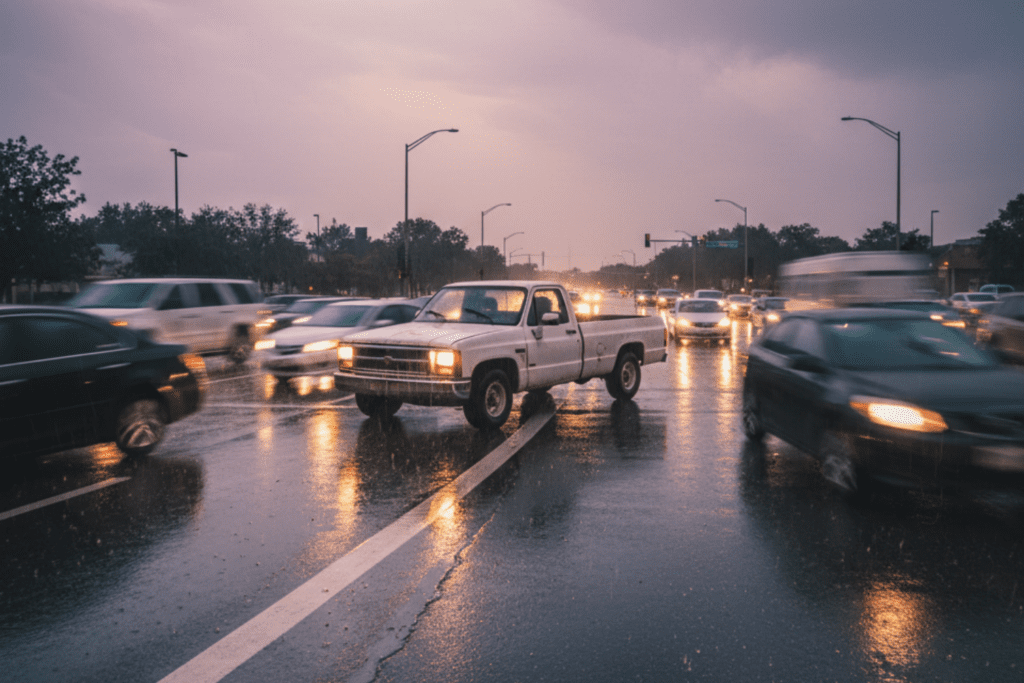
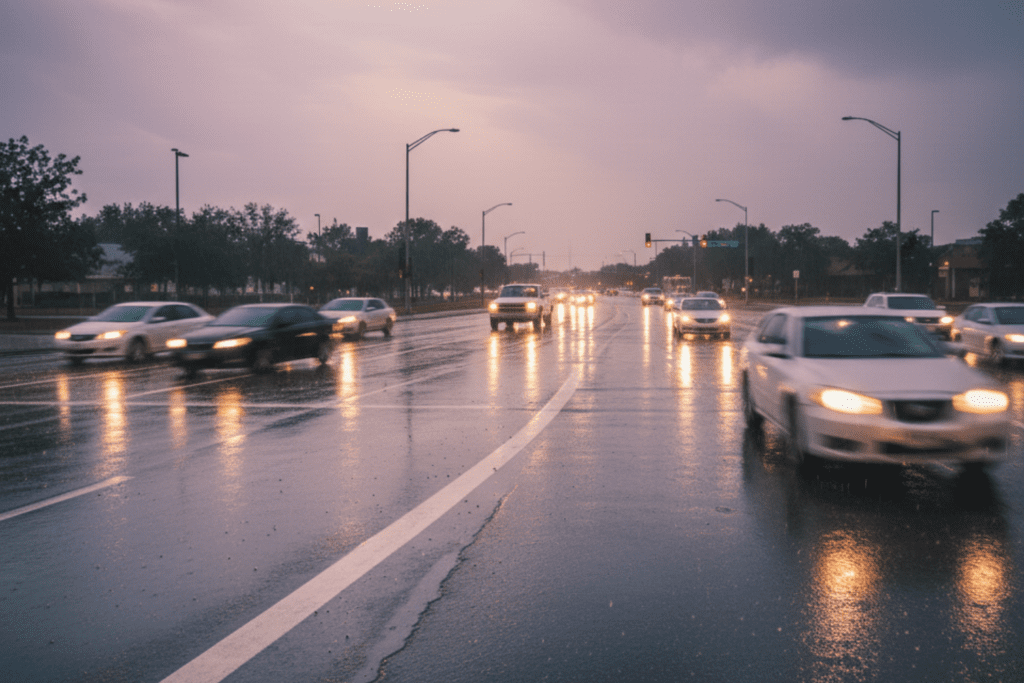
I was sitting at the busy intersection near the big Supercenter on Washington Avenue, wipers going back and forth in fast, frantic strokes. Everything outside looked smeared, like the rain was trying to erase the world.
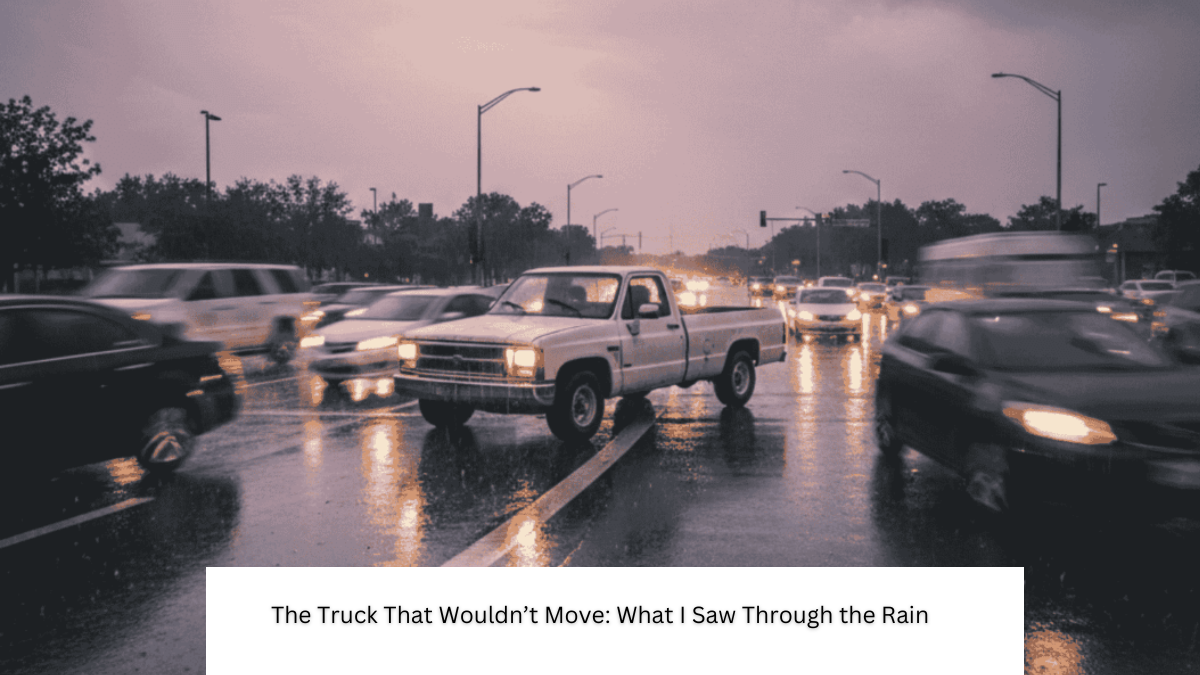
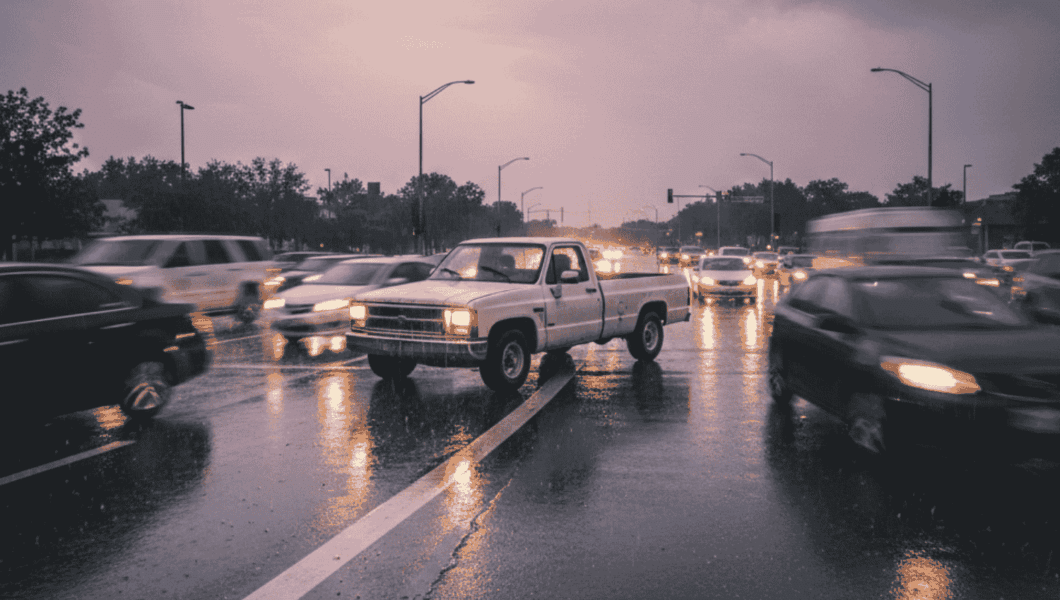
In the turning lane, a beat-up white pickup truck sat perfectly still.
The light turned green.
It stayed green.
Nothing.
Then it turned red.
Then green again.
The truck didn’t move.
Cars began swerving aggressively around it, tires slicing through puddles, spraying water into the air like it was an insult. Drivers leaned out of windows to shout. A guy behind the truck had both hands on the horn, jaw clenched, face red with the kind of anger that makes you feel like you’re entitled to a clear road.
And then I saw something that made my stomach twist.
A teenager in a glossy sports car slowed down just enough to hold up his phone, recording through his windshield like it was comedy. Like this was entertainment. He laughed, shook his head, and sped off, the truck still sitting there like a stubborn object in a game.
I felt the anger in me too, for half a second. The knee-jerk feeling you hate admitting you’re capable of.
Come on. What are you doing? Move.
It’s embarrassing how quickly we can be pulled into the same current as everyone else. How easy it is to borrow other people’s outrage, even when you don’t know the story yet.
But as I crept past in the next lane, I finally got close enough to see into the cab.
The driver wasn’t looking down at his phone.
He wasn’t slumped over like he’d fallen asleep.
He was sitting bolt upright, staring straight ahead. His eyes were wide open, fixed on nothing, blinking slowly like his body had forgotten what to do next.
There was something wrong with his face. Not pain exactly. Not panic. Something blanker. Like his mind had stepped away and left his body behind.
That’s when the anger drained out of me so fast it left a hollow.
I didn’t think idiot.
I thought: Oh no.
I pulled over to the shoulder, hazard lights flashing, the sound of my turn signal lost under the rain and horns. My heart was pounding so hard I could feel it in my throat.
Stepping out into traffic feels different than it used to. It’s not just cars anymore. It’s people behind glass, insulated from the consequences of what they do. It’s speed. It’s distraction. It’s the knowledge that someone could hit you and keep going.
I sat for one breath, hand on the door handle, and in that brief pause my brain tried to bargain with me.
Someone else will help.
The truck will move.
It’s not your business.
But I couldn’t stay in the car. Not after seeing those eyes.
I got out and the cold rain hit me immediately, soaking through my clothes in seconds. The air smelled like wet asphalt and exhaust.
I ran toward the truck, waving my arms and shouting for cars to stop. People yelled at me like I was the problem now. A man in a suit leaned out his window and screamed, “Get off the road!” like I was committing some personal offense against him.
I didn’t look at him. I didn’t argue.
I made it to the driver’s side window and knocked hard.
“Sir? Sir, can you hear me?”
Nothing.
The rain was pouring sideways, splattering against the glass, and when I leaned closer I realized the man wasn’t wet from the storm.
He was soaked in sweat.
His gray hair was plastered to his forehead. His skin was pale, almost gray itself, and his lips had that faint bluish tint that makes your stomach drop before your brain catches up.
He looked like someone’s grandfather. Like someone who still kept a photo in his wallet from twenty years ago. Like the kind of man who would hold a door open too long, then apologize for holding it too long.
I swallowed, suddenly aware of how loud the world was around us. Horns, engines, rain, tires.
“Sir,” I said again, louder. “I’m going to open the door, okay? Please don’t be afraid.”
My hand shook when I pulled the handle.
The door opened.
And instantly, everything went from urgent to critical.
His foot slipped off the brake.
The heavy truck groaned like some tired animal and began to roll forward, slow at first, then gaining its own momentum toward the intersection where cars were still trying to push through.
For a split second I just stared at it, mind blank.
Then my body moved before I could fully think.
“Whoa!”
I threw myself inside, half-falling across him. My left hand slammed onto the brake pedal and pressed down with everything I had. I could feel the solid resistance under my palm, the vibration in the truck as it fought against the roll. With my other hand I reached for the gear shift and shoved it into Park.
The truck jerked and stopped.
I let out a breath I didn’t realize I’d been holding, and in that same moment I saw the driver’s head tilt slightly forward, his body suddenly heavy, like the strings holding him upright had been cut.
He slumped.
His eyes were still open, but they weren’t looking anymore.
Panic hit me in a clean, cold wave.
I unbuckled his seatbelt, hands clumsy and fast, and pulled him toward me.
He was heavier than I expected. Dead weight. The kind of weight that doesn’t help you. He wasn’t standing. He wasn’t holding on. He was simply… collapsing.
I’m not a big guy. And I remember thinking in a detached corner of my mind, How am I going to do this?
But adrenaline is terrifyingly efficient. It doesn’t ask permission. It just turns you into someone who does what needs to be done.
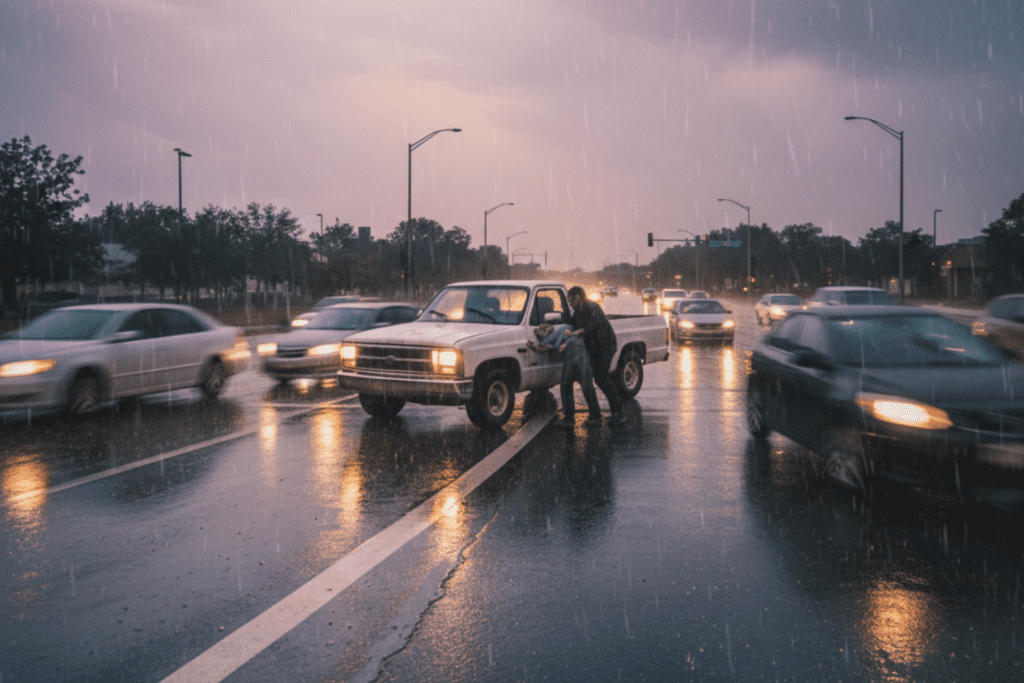
I dragged him out of the truck, one step at a time, backward toward the grass. My shoes slipped on the wet pavement. My arms burned. The rain kept pouring into my eyes.
Cars were still moving. Still flying past. Still inches from my back as if none of this mattered.
It’s hard to describe that feeling, kneeling in the rain with a stranger’s body in your arms while the world continues to rush around you. It makes you understand something cruel about life. How easily a person can be dying in plain sight while everyone else is just trying to get home for dinner.
Finally, the world began to notice.
A landscaping crew in a work truck saw what was happening. Their vehicle pulled forward with purpose, not hesitation, and they angled it to block a lane, creating a barrier between us and the moving traffic. For the first time since I stepped out of my car, I felt like we weren’t completely exposed.
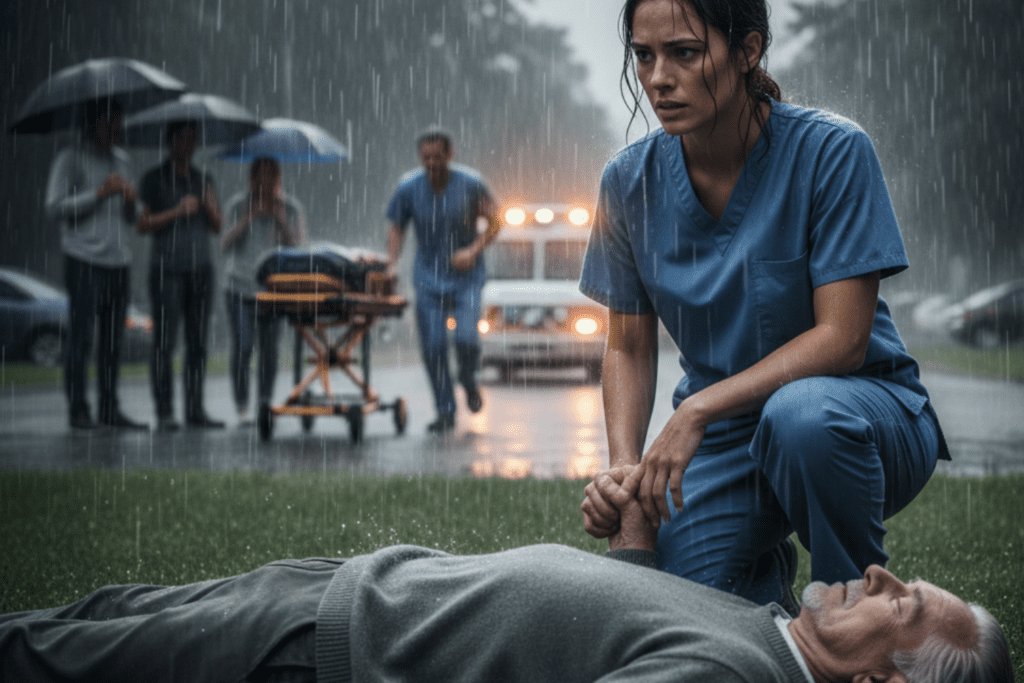
A woman in scrubs slammed on her brakes and ran across the wet asphalt like she’d been waiting for a reason to use her hands for something that mattered.
“I’ve got him!” she shouted. “Lay him flat!”
There was no drama in her voice. Just command. It grounded me.
We got him onto the grass, his head turning slightly to the side, his mouth slack. His skin looked wrong. Too pale. Too slick.
For a moment, I thought maybe we were too late.
Then his whole body seized.
It happened so suddenly that it looked unnatural, like his muscles had been hijacked. His arms jerked. His legs stiffened. His jaw clenched hard enough that I heard the sound of teeth grinding. Foam gathered at the corner of his mouth.
The nurse dropped instantly to her knees, bracing him, turning him on his side.
“Keep him like this,” she said sharply. “Don’t let him choke.”
The landscaper who’d come closest held the man’s hand. He looked stunned, like he couldn’t believe his workday had turned into this. His voice came out soft, almost childlike.
“Stay with us, buddy,” he kept saying. “Stay with us.”
Four minutes is not a long time, not on paper.
But in the rain, with a man convulsing in front of you, four minutes stretches out until it feels like a different kind of life.
The horns had faded now, replaced by the sound of tires hissing past and people staring. Some got out of their cars and stood at a distance, hands over mouths. Others stayed in their vehicles, watching like it was safer to be inside.
I could feel my hands shaking, but I kept them where they were needed. I kept my eyes on his face, on the nurse’s quick movements, on the small signs of air and breath.
At some point, the seizure eased. His body stopped thrashing and went limp again, as if drained.
It was quiet in that strange way it gets quiet after something violent.
And then we heard the sirens.
They cut through the rain like a sharp thread. The ambulance arrived with urgency that felt like relief.
Paramedics jumped out, moving fast, efficient, practiced. They took over without wasting time.
One of them pricked the man’s finger.
I watched his face change as he read the number.
“Blood sugar is 17!” he shouted.
Seventeen.
The number hit me like a physical blow, even though I didn’t fully understand it yet. I only knew it was wrong. I only knew the medic’s voice carried a kind of alarm you don’t hear for small problems.
Another paramedic moved to the man’s arm, preparing an IV. Someone else checked his pupils, his breathing, his pulse.
Later, I would learn what it meant. How normal blood sugar is usually around 100. How 17 isn’t just low. It’s deadly. How that number belongs to people who are about to slip away.
The medic spoke again, fast, clipped.
“He’s in severe diabetic shock,” he said. “Looks like he had a mild stroke too.”
A mild stroke at the wheel.
That explained the blank stare. The locked body. The foot slipping off the brake. The truck rolling forward like it was no longer under human control.
That man hadn’t been ignoring anyone.
He hadn’t been rude.
He hadn’t been selfish.
He had been dying in traffic while strangers screamed at him to hurry up.
The paramedics lifted him onto the stretcher. The nurse stepped back, rainwater dripping from her sleeves, her chest rising and falling like she’d run miles.
I stood there soaked through, mud on my knees, my arms aching from holding him up.
They loaded him into the ambulance.
The doors closed.
The sirens started again.
And then the ambulance was gone.
Just like that.
As if the road hadn’t almost swallowed him. As if we hadn’t just held a stranger on the edge of something irreversible.
I stood on the side of the road, breathing hard, feeling the cold sink deeper into my bones now that adrenaline was fading. My hands wouldn’t stop trembling. I wiped rain from my face and couldn’t tell what was rain and what wasn’t.
Traffic began to flow again.
The light turned green.
Cars moved.
Like a river that had been briefly blocked by a fallen branch, then corrected itself and forgot.
And the horns started again. Not for him this time, but for the next delay, the next irritation, the next moment someone didn’t accelerate quickly enough.
It was surreal.
It made me angry in a way I didn’t know how to place. Not just at the people who’d screamed. Not just at the teenager who’d filmed. At the whole shape of it. At how quickly we treat other people as obstacles instead of lives.
I kept thinking about how close it was.
If I’d stayed in my car, thinking someone else would handle it.
If I’d assumed the driver was on his phone.
If the truck had rolled farther into the intersection before I got the brake.
If the landscaping crew hadn’t blocked that lane.
If the nurse hadn’t stopped.
So much of it was timing. Fragile. Random. A chain of small choices that stacked into a rescue.
And I couldn’t shake one thought:
That man was someone’s father.
Someone’s husband.
Someone’s person.
And for several minutes, the world had reduced him to a nuisance.
After it was over, the landscaping crew stayed a moment. One of them asked if I was okay, as if it hadn’t been my choice to step into the road. As if I hadn’t been the one who felt the fear in my throat.
“I think so,” I said. My voice sounded strange to me, too thin.
The nurse put a hand on my shoulder briefly, the way someone does when words aren’t useful.
“Good job stopping that truck,” she said. No praise in it. Just truth.
Then she jogged back to her car like she still had a life waiting.
The landscapers climbed back into theirs.
And I walked back to my own car, each step slower than it should have been. My legs felt heavy now, like my body was finally registering what had happened.
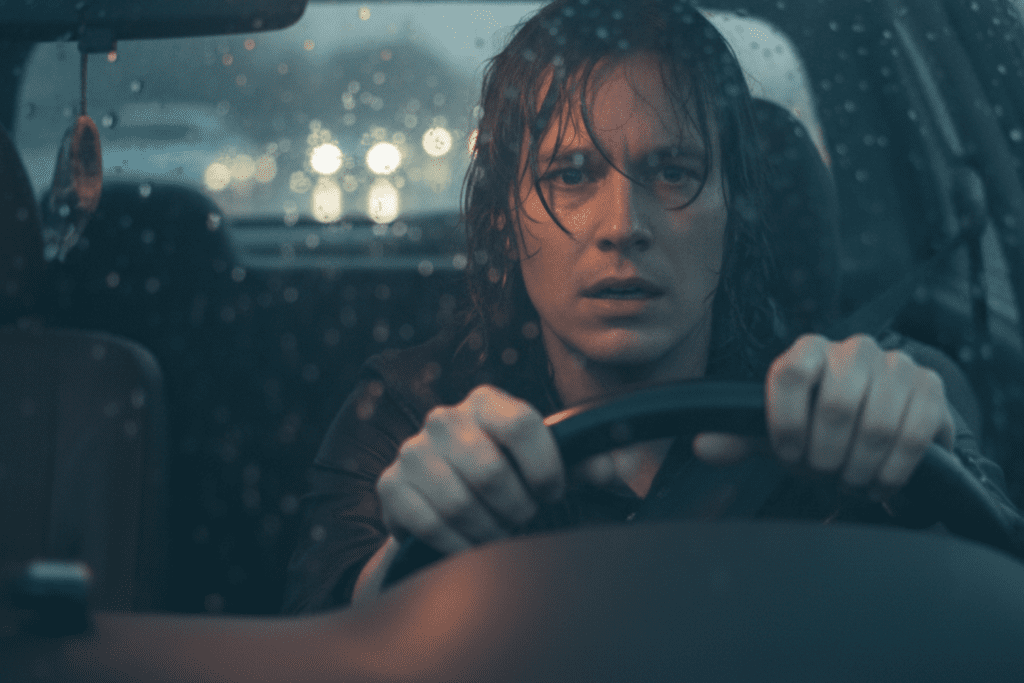
Inside my car, the heater blasted warm air that smelled faintly like damp fabric. I sat there gripping the steering wheel, shaking, staring at the lane where the truck had been.
I imagined him sitting there while the horns screamed.
I imagined the fog in his brain. The helplessness of not being able to move, not being able to answer.
I imagined how loud and cruel it would have felt, hearing anger directed at you while your body betrayed you.
And I thought about the teenager recording.
Not because teenagers are uniquely cruel. They aren’t. Adults do it too. We all do, in different ways. We reduce people to moments and mistakes. We label them quickly because it’s easier than admitting the world is unpredictable and fragile.
I used to think being judgmental was about being mean.
Now I think it’s often about being afraid.
If we convince ourselves the person in the other car is just careless, just stupid, just selfish, then we get to believe it won’t happen to us. We get to believe we’re safe because we’re better.
But sometimes the driver in front of you isn’t careless.
Sometimes he’s having a seizure.
Sometimes her blood sugar is crashing.
Sometimes someone’s heart is failing behind the wheel.
Sometimes someone is trying not to die, and they don’t have the ability to warn you.
The rain slowed by the time I merged back into traffic, but the wet road still reflected every brake light like a warning.
I drove home differently than I had that morning. Quieter. Like the world had changed its shape slightly.
I kept seeing his face. That blank stare. That sweat. That stillness that didn’t belong in a moving lane.
I didn’t know his name.
I still don’t.
But I know I’ll remember him.
Not as the man who blocked traffic, the way everyone decided he was.
As the man who was seconds away from slipping into a coma he wouldn’t wake from, while strangers screamed at him to hurry.
That night, the scene replayed in my head the way frightening things do. Not in order. Not cleanly. In fragments.
The horn blasts.
The truck rolling forward.
My hand slamming the brake.
His body collapsing.
The nurse shouting.
“Blood sugar is 17.”
Seventeen.
I thought about how close death can be to ordinary life. How it can sit in a turning lane. How it can wear the face of someone you’d normally never notice.
And I thought about what it means to be part of a crowd.
How quickly a group of people becomes a single emotion. How contagious impatience is. How loud cruelty is when it’s protected by anonymity.
I’m not writing this as a lesson, or to sound like I’ve figured something out.
I’m writing it because I can’t get it out of my system.
Because I need to say it somewhere: I almost became one of them.
For a moment, I felt the anger too. I thought he was selfish too. It was only luck, proximity, and one glance into a cab that stopped me from joining the chorus.
That scares me more than the traffic did.
It scares me because it means none of us are as kind as we think we are, not automatically. Kindness isn’t our default setting. It’s a choice we have to make while everyone around us is choosing something else.
If there’s anything I want to keep from this, it isn’t pride. It isn’t some heroic story.
It’s the reminder that we don’t know what’s happening inside other cars.
We see only the outside.
We see delay.
We see inconvenience.
We rarely see the emergency until it forces itself into view.
So the next time someone sits too long at a green light, I hope I remember him.
I hope I pause long enough to look closer.
Because sometimes the person in front of you isn’t being difficult.
Sometimes they’re disappearing.