Elvis Presley and Gladys: A Love Story Wrapped in Struggles
Elvis Presley—the legendary King of Rock and Roll—captured the hearts of millions, but behind the fame was a deeply personal story that few truly understood. At the heart of Elvis’s emotional world was his mother, Gladys Presley, a woman who shaped his life in profound ways. While the media painted their bond as picture-perfect, the truth was far more complex—a story marked by fierce love, emotional codependency, and heartbreaking decline.
Behind the Public Image
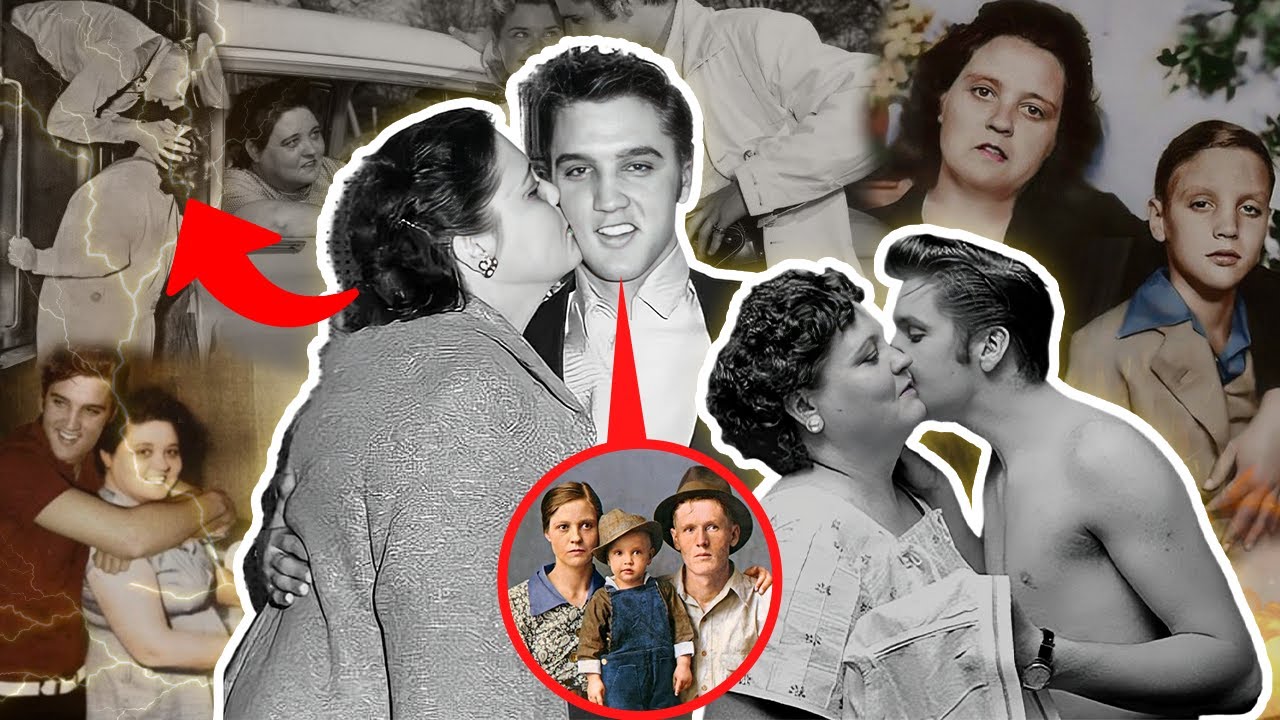
From the very beginning of his rise to stardom, Elvis was presented as the humble Southern boy who adored his mother. Gladys was shown beaming at concerts, always by his side, the proud mother of a star. This carefully curated image became a key part of Elvis’s brand—family-oriented, grounded, and devoted.
But that version didn’t show the full picture.
Behind closed doors, Gladys was quietly unraveling. The pressures of fame, a growing sense of isolation, and her son’s physical and emotional distance as he toured the world, slowly eroded her spirit. Battling loneliness and depression, Gladys turned to alcohol, hiding it from her son, who strongly disapproved of drinking.
A Deeply Intertwined Beginning
Gladys Presley was born into poverty in Mississippi and married Vernon Presley under less-than-ideal circumstances. After Vernon was briefly imprisoned, Gladys was left to raise young Elvis alone—solidifying their close bond.
When Elvis’s twin brother Jesse was stillborn, it intensified Gladys’s attachment to Elvis. He became not only her only child but her emotional lifeline. Their relationship was fiercely protective, almost inseparable. Elvis often referred to his mother as “the only woman he ever truly loved.”
In many ways, Elvis became her world—and she became his anchor.
Fame’s Invisible Wound
As Elvis’s fame exploded, the mother-son relationship that once brought comfort now became strained. Despite his efforts to provide financially and emotionally, the whirlwind of success made meaningful connection harder to maintain. Gladys found herself adrift in a world she no longer recognized, missing the simpler days when Elvis was just her boy.
Her health began to suffer, both physically and emotionally. The weight of being left behind—of losing the closeness she once shared with her son—took a toll. Her dependence on alcohol deepened, but remained hidden from the world.
Her Final Days and Elvis’s Greatest Loss
In 1958, Elvis was drafted into the U.S. Army. The idea of her son going overseas filled Gladys with dread. Her emotional state deteriorated rapidly, and her physical health followed. She was soon hospitalized with liver problems and hepatitis—complications worsened by years of silent suffering.
Gladys Presley passed away on August 14, 1958, at just 46 years old.
Elvis was shattered. The woman who had given him strength, who had stood by him through every trial, was gone. Her death left an emotional scar that never fully healed. His performances after her passing were tinged with a new kind of sorrow—an ache that echoed in every ballad and blues note.
A Lasting Legacy Beyond the Spotlight
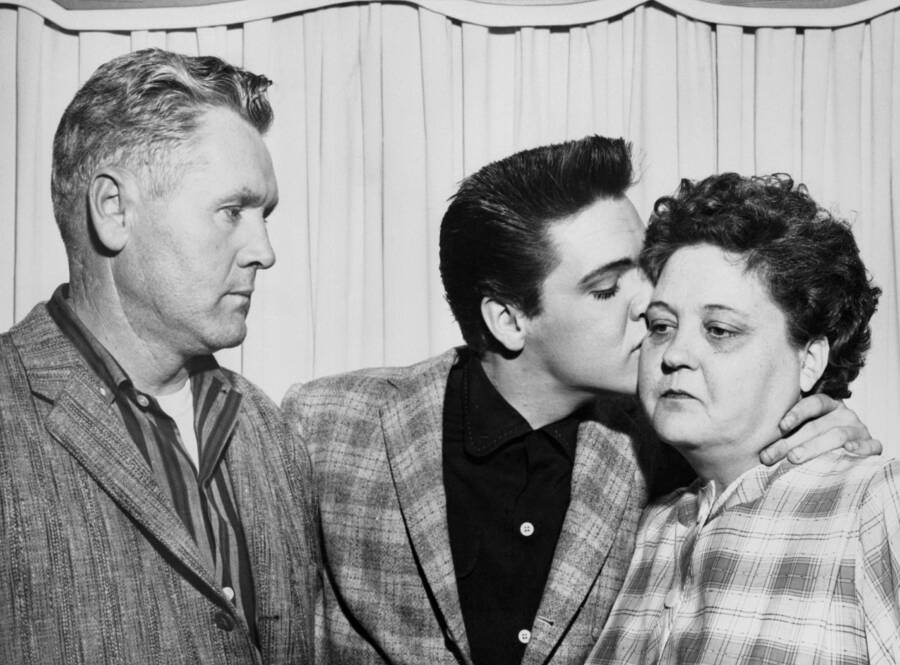
Though Gladys left the world too soon, her impact on Elvis never faded. Her values—loyalty, humility, kindness—remained central to how he carried himself, even as a global icon. He often spoke of her with reverence, and her memory guided him through personal challenges and fame’s demands.
Their bond wasn’t just a touching backstory—it was a defining thread in the fabric of Elvis Presley’s identity.
A Relationship More Human Than Myth
The real story of Elvis and Gladys Presley is one of love that ran deep—but also love that hurt. Their closeness was both their strength and their sorrow. Fame brought them both into the public eye, but it also pulled them apart.
Their relationship was far from the perfect picture painted in magazines. It was emotional, raw, sometimes painful—but always real.
And it reminds us: Even legends are shaped by the quiet struggles of family and the love that never lets go.