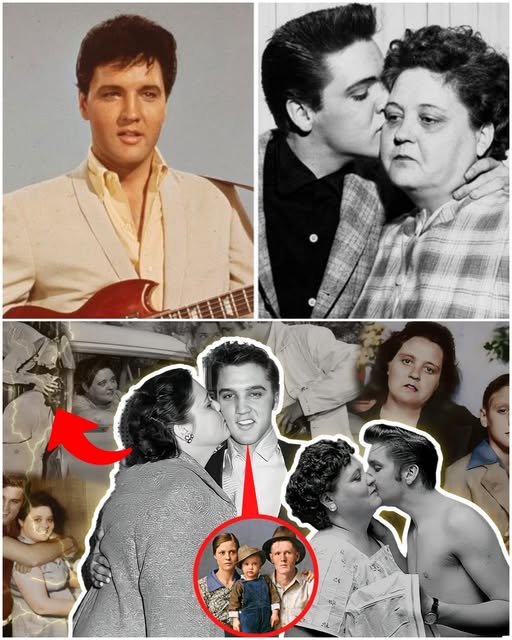
Elvis Presley is remembered as the King of Rock and Roll, a cultural icon whose voice and stage presence captivated millions. But behind the electrifying performances, glittering suits, and worldwide fame was a private, deeply emotional relationship with the one woman he always remained closest to—his mother, Gladys Presley.
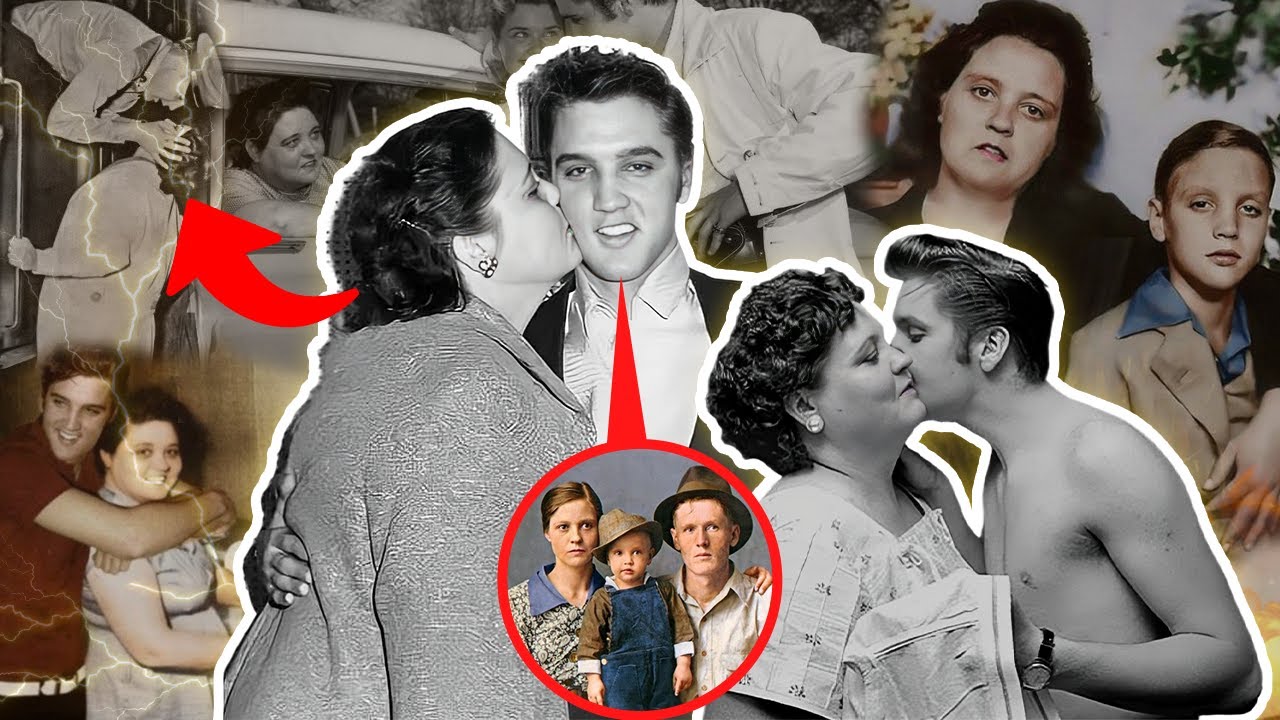
Their bond was intense, complex, and ultimately tragic.
Gladys Love Smith was born in 1912 in Mississippi. Her early life was marked by hardship and resilience. In the early 1930s, she married Vernon Presley, and soon after, the couple welcomed twin boys—Jesse Garon and Elvis Aaron. Jesse was stillborn, an unspeakable loss that would profoundly shape the mother-son bond that followed.
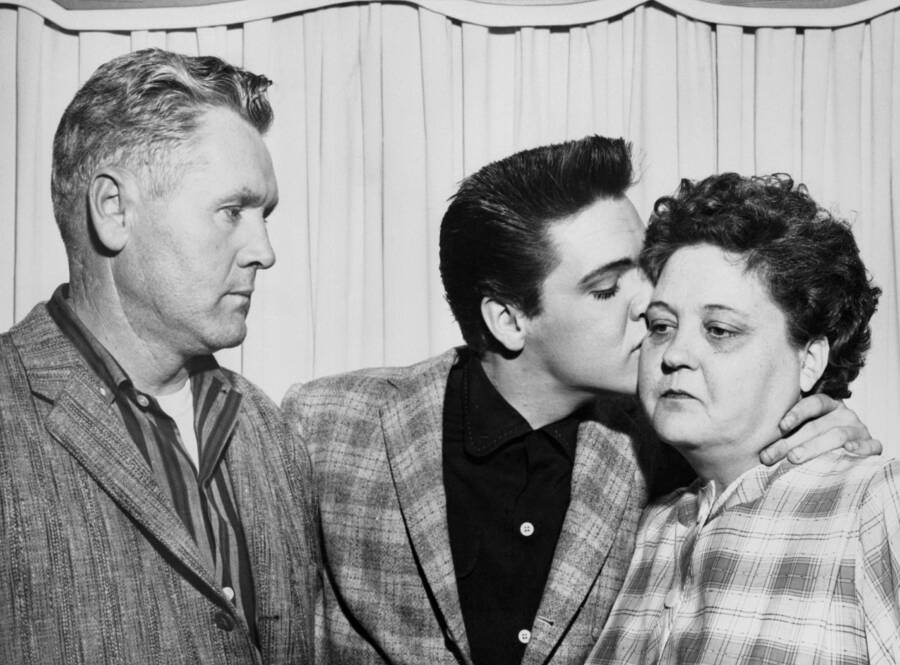
With Vernon in and out of work—and later jailed for check forgery—Gladys became the primary caregiver and emotional foundation for young Elvis. The two became inseparable. In many ways, Elvis was not just her son but her emotional anchor, and she was fiercely protective of him.
The Presleys lived in poverty, often relying on the kindness of neighbors to get by. But what they lacked in money, they made up for in closeness. Gladys instilled in Elvis a deep sense of loyalty, humility, and love—values that stayed with him long after he became a global sensation.
When Elvis began to rise to fame in the mid-1950s, Gladys remained by his side. She attended his early performances and celebrated his success with pride, even as the whirlwind of stardom began to pull her son into a world she couldn’t quite follow.
The media loved the image of Gladys as the proud Southern mother beaming beside her famous son. Magazine articles and interviews often played up their closeness, presenting their bond as wholesome, pure, and unbreakable.
But behind the polished public image, Gladys was struggling.
As Elvis toured more frequently and spent less time at home, she began to feel isolated. The boy who once clung to her hand now lived in a mansion surrounded by agents, handlers, and fans. The more his fame grew, the more alone she felt. Her loneliness turned inward, and she began drinking in secret—a habit she knew Elvis disapproved of.
Elvis tried to care for Gladys in the best way he knew—lavishing her with gifts, a house, and financial security. But what Gladys needed most was emotional closeness, and that became increasingly rare. Her mental and physical health started to decline, worsened by the emotional toll of Elvis’s absence and her deep anxiety over his fame and safety.
When Elvis was drafted into the U.S. Army in 1958, Gladys’s world crumbled. The thought of her only child being sent far from home—possibly into danger—was more than she could handle. Her depression deepened. Her drinking intensified. Her health rapidly deteriorated.
That summer, she was hospitalized with acute hepatitis, worsened by liver damage. Despite Elvis rushing home on emergency leave, there was little he could do. On August 14, 1958, Gladys Presley died at just 46 years old.
Elvis was shattered. He collapsed in tears at her funeral, unable to contain his grief. Those who knew him said he was never the same afterward. The light in him dimmed. The woman who had given him everything—who had believed in him when no one else did—was gone.
Even after her death, Elvis often spoke of her with a reverence reserved for no one else. He once said, “She was the sunshine of my life.” Her influence remained etched into his soul—and into his music, where themes of longing and heartbreak echoed throughout his career.
The public knew only the surface of Elvis and Gladys’s relationship: the boy who loved his mama, the woman who cheered him on. But the reality was far more human, and far more painful. Gladys suffered in silence, overwhelmed by loneliness, fear, and the growing chasm between herself and her son.
Their love was real, but it was complicated. Elvis tried to save her with fame, while Gladys only wanted the simple closeness they once shared. The tragedy of their relationship lies not in a lack of love—but in how fame built a wall between them neither could tear down.
Today, fans still speak of the powerful bond between Elvis and Gladys. Her memory lived on in every gospel song Elvis recorded, in every moment he turned away from Hollywood to reconnect with his roots, and in every act of kindness he showed those around him.
Gladys Presley never lived to see the full height of her son’s legacy—but her love shaped it. Her spirit walked with him until his final days. In every way that mattered, Elvis remained her boy.
And the world, even now, continues to feel the echo of a mother’s love behind the voice of a king.