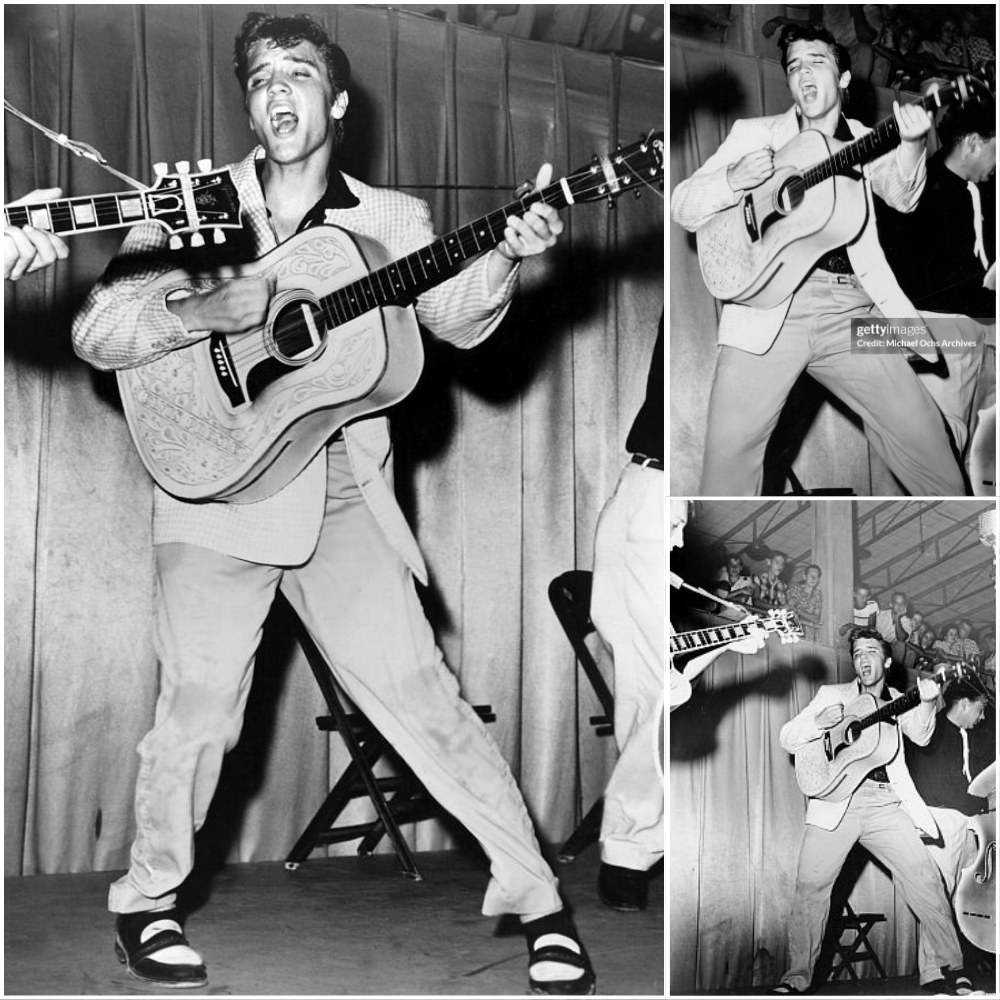
When Elvis Presley burst onto the scene in the 1950s, he wasn’t just a singer — he was a cultural earthquake. They called him vulgar. They tried to censor his movements and music. Some even went so far as to threaten jail for his daring performances. But what the establishment saw as scandal, Elvis’s fans recognized as a bold revolution—a new voice breaking free from the constraints of conservative society.

The Hip-Shaking Scandal That Shook America
Elvis’s signature gyrating hips weren’t just dance moves—they were a declaration of independence, a challenge to the staid norms of 1950s America. His live performances sparked outrage from TV networks and moral watchdogs, many of whom considered his style too provocative for the airwaves. In fact, several television stations banned his appearances, fearing his energy would corrupt young viewers.
But for millions of teenagers, Elvis was electrifying—a symbol of freedom, rebellion, and raw sexuality that mainstream culture had long suppressed. His music blended rock, blues, and R&B, breaking down racial and genre barriers and creating a sound that spoke directly to a new generation hungry for change.
From Censorship to Chart-Topping Triumph
Despite the backlash, Elvis’s popularity only skyrocketed. His records dominated the charts, with hits like “Hound Dog,” “Jailhouse Rock,” and “Heartbreak Hotel” becoming anthems of youthful defiance. No amount of censorship could silence the King.
Elvis’s success was a message louder than words: raw talent and authentic expression can’t be contained. He turned controversy into superstardom and set the stage for future artists to push boundaries.
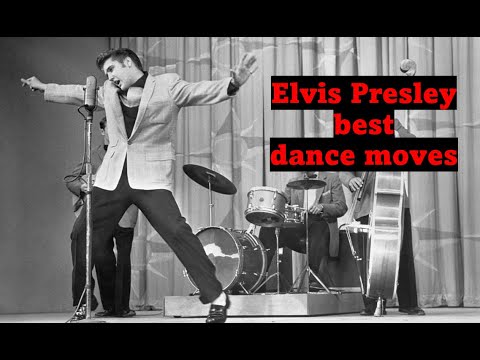
More Than Music: A Cultural Revolution
Elvis’s impact went beyond music—he helped reshape American culture. His unapologetic style challenged racial segregation in music, introducing wider audiences to traditionally African American genres. He paved the way for future artists to blend influences freely and express themselves boldly.
The King wasn’t just a performer; he was a force of social change that reflected the evolving attitudes of a society on the brink of transformation.